Juliana Stratton's Landslide Victory: A Message Sent in Illinois
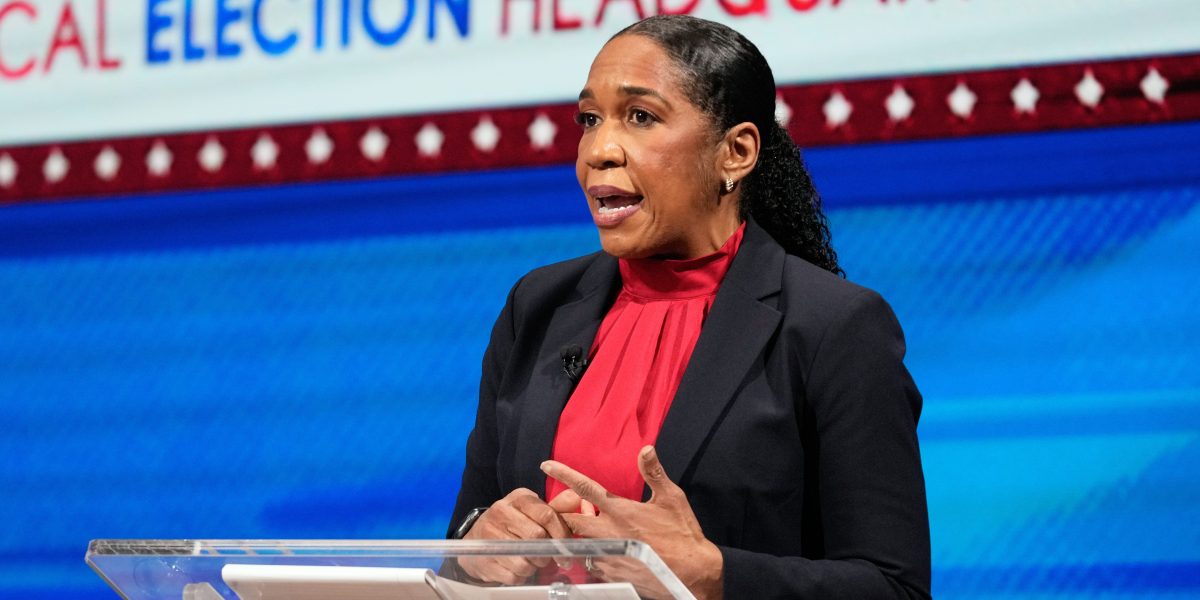
The 2026 election cycle has already delivered its share of political fireworks, and few contests captured the nation's attention quite like the Illinois Democratic primary for the U.S. Senate. Lieutenant Governor Juliana Stratton's stunning victory, securing the nomination for the seat being vacated by the long-serving Senator Dick Durbin, was more than just a win; it was a potent statement against established political narratives and the perceived sway of money in politics. Her campaign, which saw her defeat two sitting members of Congress – Representatives Raja Krishnamoorthi and Robin Kelly – became a microcosm for debates surrounding donor influence, particularly concerning the American Israel Public Affairs Committee (AIPAC), and the evolving landscape of the Democratic Party.
Stratton's path to Washington now seems clear, as Illinois has not elected a Republican to the Senate since the 1990s. If she wins the general election against Republican opponent Don Tracy, the former Illinois Republican Party chair, she will achieve a historic milestone: becoming only the sixth Black woman ever elected to the United States Senate. This potential achievement significantly energized voters across Chicago and Cook County, where her grassroots efforts and strong local ties helped her build an insurmountable lead and ultimately navigate the shadow of external financial scrutiny to claim victory.
The Juliana Stratton AIPAC Narrative: Deconstructing Donor Influence
From the outset, the discussion around Juliana Stratton AIPAC ties was a persistent theme, shaping much of the media coverage and candidate discourse. While AIPAC itself did not formally endorse Stratton or spend directly on her behalf in the Illinois Senate race, federal election filings revealed a compelling detail: at least 27 significant donors with strong affiliations to the pro-Israel lobby contributed over $70,000 to her campaign. It's worth noting that only a small fraction of these donors resided in Illinois, raising questions about the geographical scope of political influence.
The proximity of these donors to AIPAC fueled intense speculation about the organization's indirect influence, even in the absence of a direct endorsement. Further deepening this narrative was the involvement of Lee Rosenberg, a former AIPAC president and a long-time political adviser to Illinois Governor JB Pritzker and former President Barack Obama. Rosenberg's presence on Stratton's campaign finance committee placed the question of AIPAC's reach squarely in the public conversation, making the link between Juliana Stratton AIPAC a focal point for political observers.
Stratton's campaign proactively addressed these questions, emphasizing that AIPAC had neither endorsed her nor spent money directly for her. When pressed on the specifics, Stratton drew a clear line, stating unequivocally that she had not accepted money from the PAC itself. She further articulated her support for a two-state solution for Israel and Palestine, a stance that allowed her to position herself as a pragmatic candidate capable of navigating complex geopolitical issues without aligning with perceived extremes. This strategic positioning was key in managing the donor scrutiny and maintaining voter confidence.
Understanding this nuance is vital for voters. Distinguishing between a political action committee (PAC) spending directly on a candidate's behalf and individual donors who happen to be affiliated with a specific lobby is crucial. While both scenarios involve money in politics, the mechanisms and ethical considerations can differ significantly. For candidates, this highlights the challenge of transparency and the need for clear communication regarding financial contributions.
Beyond AIPAC: The Deluge of Outside Money in Illinois
The Illinois primaries, particularly the Senate contest, served as a stark illustration of the escalating role of outside money in American politics. Beyond the specific questions surrounding Juliana Stratton AIPAC connections, the broader Chicago-area congressional and Senate races saw an staggering influx of over $50 million in external spending. This financial torrent transformed Illinois into a real-world laboratory, testing the true extent to which money can sway outcomes in a modern Democratic primary. Campaigns, super PACs, and dark money groups poured resources into advertising, voter outreach, and opposition research, creating an incredibly competitive and financially intensive environment.
For context, rival candidate Raja Krishnamoorthi alone had amassed approximately $30 million in his campaign coffers, dwarfing many other races. This financial arms race underscores a critical challenge in contemporary politics: how do candidates, particularly those without access to vast personal wealth or established donor networks, compete against such well-funded opponents? Stratton's victory, despite her opponents' significant financial advantages and the intense focus on her donor list, suggests that grassroots mobilization, a compelling message, and strong local ties can still triumph over sheer spending power.
Practical Tip for Voters: When evaluating candidates, look beyond the headlines about campaign spending. Investigate where the money is coming from (individual donors, PACs, super PACs), but also scrutinize the candidate's actual policy positions, their voting record (if applicable), and their engagement with local communities. High spending doesn't automatically equate to electoral success, as Stratton's primary win powerfully demonstrated.
Stratton's Strategy: Navigating Scrutiny and Defining a Path
Juliana Stratton's successful navigation of the donor influence narrative offers valuable lessons for future campaigns. Her approach was multifaceted:
- Clear Delineation: By explicitly stating she did not accept money from the AIPAC PAC itself, she drew a boundary that, while perhaps subtle to some, was important for her supporters and for maintaining her independent image.
- Policy Articulation: Her unequivocal support for a two-state solution provided a clear and moderate stance on a contentious issue, preventing her from being easily pigeonholed by critics. This helped solidify her position as a balanced leader.
- Focus on Local Ties: Stratton's campaign prioritized grassroots organizing and building strong relationships within Chicago and Cook County. This ground game proved critical, allowing her to run up margins where it mattered most, effectively counteracting the impact of external spending and donor controversies.
- Emphasizing Historic Representation: The prospect of becoming the sixth Black woman in the Senate was a powerful motivator for voters, especially in key demographic areas. This historic angle helped her transcend specific donor discussions and connect with a broader vision for representation and progress.
Her victory is a testament to the idea that while money undoubtedly plays a significant role in politics, it is not the sole determinant of success. The narrative surrounding Juliana Stratton AIPAC donors highlights the ongoing tension between campaign finance transparency and the democratic process. Stratton's ability to overcome this scrutiny and secure a decisive win sends a loud message to political operatives and candidates across the country, reinforcing the power of authentic connection with the electorate.
Conclusion: Redefining Influence in Democratic Politics
Juliana Stratton's impressive primary win in the Illinois Senate race is a landmark event, not just for its historical implications, but for what it reveals about the dynamics of modern Democratic politics and the evolving influence of lobbying groups. The consistent focus on the Juliana Stratton AIPAC donor connections forced a critical examination of how external financial support is perceived and navigated by candidates. Stratton's strategic response—emphasizing her independence from the PAC itself and articulating a nuanced policy position—allowed her to effectively defuse potential controversies and maintain her campaign's momentum. Her success, amidst a torrent of outside money, suggests a renewed emphasis on grassroots engagement and a candidate's ability to articulate a clear vision, even when faced with significant financial and rhetorical challenges. Her victory stands as a powerful example of redefining Democratic politics beyond the shadow of external financial influence, offering crucial insights for future elections nationwide.