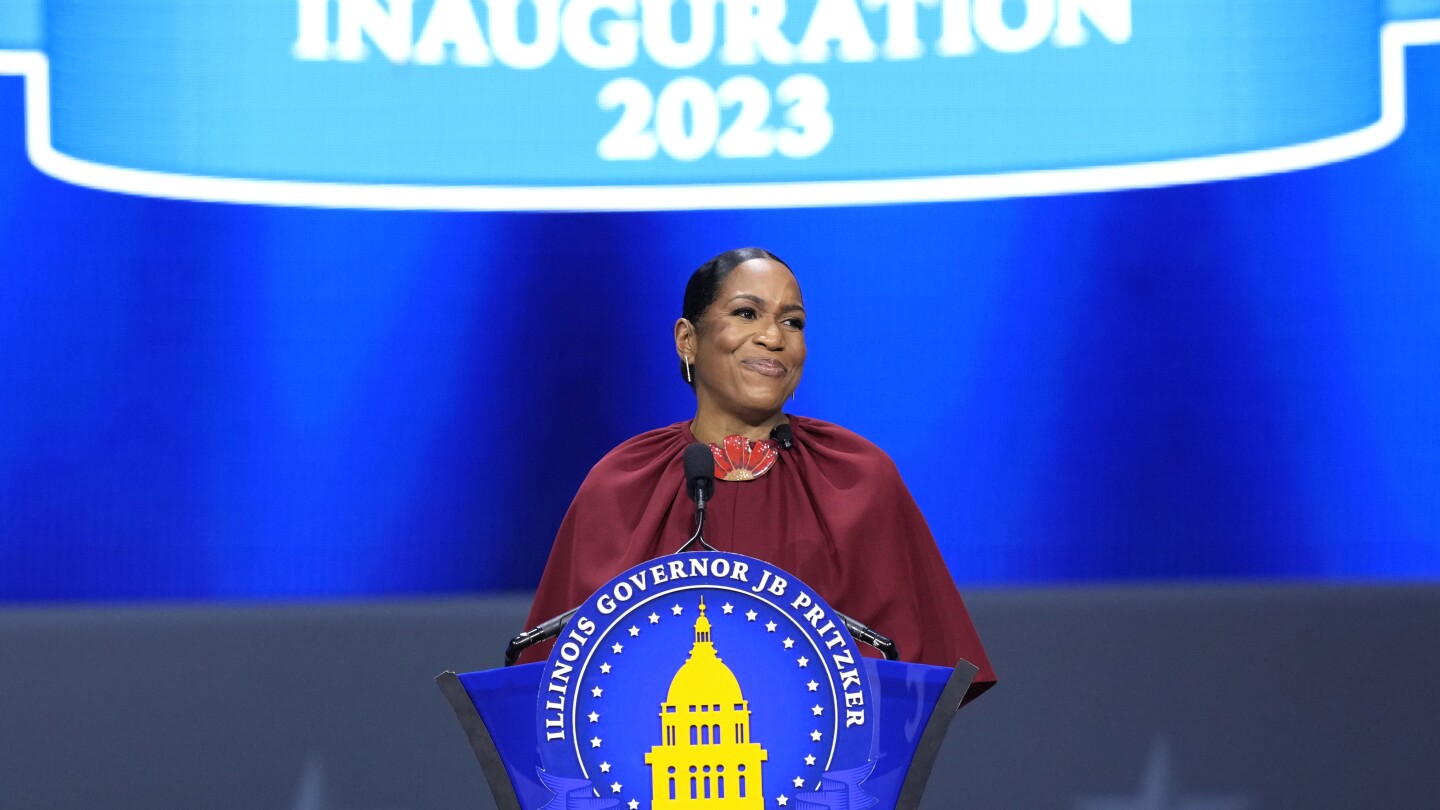
Juliana Stratton's Landmark Upset: Reshaping Illinois Politics
The political landscape of Illinois witnessed a truly seismic shift with Lieutenant Governor Juliana Stratton's stunning victory in the recent U.S. Senate Democratic primary. Defying the odds and overcoming two formidable sitting members of Congress, Representatives Raja Krishnamoorthi and Robin Kelly, Stratton secured the nomination for the seat soon to be vacated by the venerable Senator Dick Durbin. This triumph marks not only a significant personal achievement for Stratton but also sends a resounding message to political strategists nationwide about the evolving dynamics of modern primary elections.
Stratton's path to the nomination was paved by energized voters, particularly across Chicago and Cook County, where her campaign successfully built an insurmountable lead. Her potential general election victory in November, widely anticipated given Illinois's strong Democratic leanings (no Republican has won a Senate seat in the state since the 1990s), would etch her name into history as the sixth Black woman ever elected to the United States Senate. This historic milestone undoubtedly fueled a grassroots movement that proved critical in challenging well-funded opponents. Her Republican challenger in the general election will be Don Tracy, the former Illinois Republican Party chair, who also secured his party's nomination on the same night. The stage is now set for a compelling general election, though all eyes remain on the primary's unexpected outcome and the unique challenges Stratton successfully navigated.
Navigating the AIPAC Shadow: Unpacking Donor Connections and Stratton's Stance
Central to the narrative surrounding Stratton's primary bid was the persistent conversation about her ties to donors associated with the American Israel Public Affairs Committee (AIPAC). While AIPAC itself did not formally endorse Juliana Stratton or engage in direct spending in the Illinois Senate race, an analysis of Federal Election Commission filings revealed that at least 27 major donors connected to the pro-Israel lobby contributed over $70,000 to her campaign. Interestingly, only a small fraction of these donors resided within Illinois, raising questions about the geographical reach and influence of such networks.
Perhaps the most salient detail amplifying the "AIPAC shadow" was the presence of Lee Rosenberg – a former AIPAC president, a longtime political advisor to Governor JB Pritzker, and an alumnus of President Barack Obama’s advisory team – on Stratton’s campaign finance committee. This connection placed the issue of AIPAC’s potential influence squarely into the public discourse, even in the absence of an explicit organizational endorsement.
Stratton's campaign adopted a clear and consistent strategy to address these concerns. She steadfastly emphasized that AIPAC had neither endorsed her nor spent money directly on her behalf. When pressed on the sensitive issue of accepting funds from an AIPAC-affiliated group, Stratton drew a firm line, stating unequivocally that she had not accepted money from the PAC itself. Furthermore, she articulated her support for a two-state solution for Israel and Palestine, a position that allowed her to present herself as a pragmatic candidate capable of navigating complex foreign policy issues without aligning with perceived extremes. This nuanced approach proved crucial in allowing her to secure backing from various constituencies while simultaneously deflecting direct criticism about donor influence. For a deeper dive into these financial connections, explore
AIPAC Donors & Juliana Stratton: Unpacking Influence in the Illinois Senate Race.
The Money Deluge: Outside Spending and the Future of Democratic Primaries
Beyond the specific discussions around
Juliana Stratton Aipac connections, the Illinois primaries served as a stark, real-world laboratory for observing the sheer volume of outside money flooding American politics. Over $50 million in outside spending poured into Chicago-area congressional and Senate races, transforming the state into a battleground where the efficacy of vast financial resources in modern Democratic primaries was put to the ultimate test.
In the Senate race alone, Rep. Raja Krishnamoorthi had reportedly raised an staggering $30 million, dwarfing Stratton's fundraising efforts. This massive disparity in direct campaign finance, coupled with significant Super PAC spending in other races, highlighted a growing concern among voters and activists about the outsized role of wealthy donors and special interest groups. While money undeniably plays a critical role in campaign infrastructure, advertising, and outreach, Stratton's victory suggests that it is not the sole determinant of success, especially when confronted with compelling narratives and robust grassroots organization. Her win challenges the notion that unlimited spending can simply "buy" an election, particularly in a primary where voter engagement and authenticity often carry more weight than heavily funded advertising blitzes.
Strategic Insights from Stratton's Victory: A Blueprint for Modern Campaigns
Juliana Stratton's upset win offers invaluable lessons for candidates and political strategists navigating the complex terrain of modern elections. Her success provides a compelling blueprint, particularly for those facing well-funded incumbents or grappling with sensitive donor affiliations.
1.
Authenticity and Clear Messaging Prevail: Stratton's ability to clearly articulate her stance on controversial issues, such as her support for a two-state solution and her distinction between direct PAC money and individual donor contributions, resonated with voters. She didn't shy away from the questions but addressed them head-on, fostering trust.
2.
The Power of Grassroots Mobilization: While opponents boasted immense war chests, Stratton's strength lay in her ability to galvanize local support, especially in high-density areas like Chicago and Cook County. This ground-level engagement can often counteract the saturation of paid media. Campaigns should prioritize genuine community outreach and relationship-building.
3.
Strategic Navigation of Donor Controversies: Rather than denying donor ties, Stratton focused on the *type* of financial support received. Her emphasis that AIPAC did not directly endorse or spend on her behalf allowed her to create a necessary distinction. This demonstrates the importance of drawing clear ethical lines and communicating them effectively to the electorate.
4.
Highlighting a Transformative Vision: Stratton's potential to become the sixth Black woman in the U.S. Senate was a powerful and inspiring narrative that energized a broad coalition of voters. Identifying and promoting such historical or demographic significance can create a strong emotional connection with the electorate, providing a "why" beyond policy positions.
5.
Challenging the Money-as-Victory Paradigm: Her win serves as a powerful reminder that while money facilitates campaigns, it doesn't guarantee victory. In an era where outside spending often dominates headlines, Stratton's triumph underlines the continued importance of candidate quality, voter connection, and a compelling message. Her victory reinforces the idea that engaged citizens can still overcome financial advantages. For further analysis on this aspect, see
Stratton's Victory: Redefining Democratic Politics Beyond AIPAC Money.
Juliana Stratton's victory in the Illinois Democratic primary is more than just an upset; it's a powerful signal to the political establishment. It demonstrates that a candidate can successfully navigate the complexities of significant donor affiliations, counter immense financial disparities, and emerge victorious through clear messaging, strategic differentiation, and robust grassroots support. Her path to the Senate, marked by a determined stride through the "AIPAC shadow" and a deluge of outside money, offers a crucial case study for the future direction of the Democratic Party and American politics as a whole.