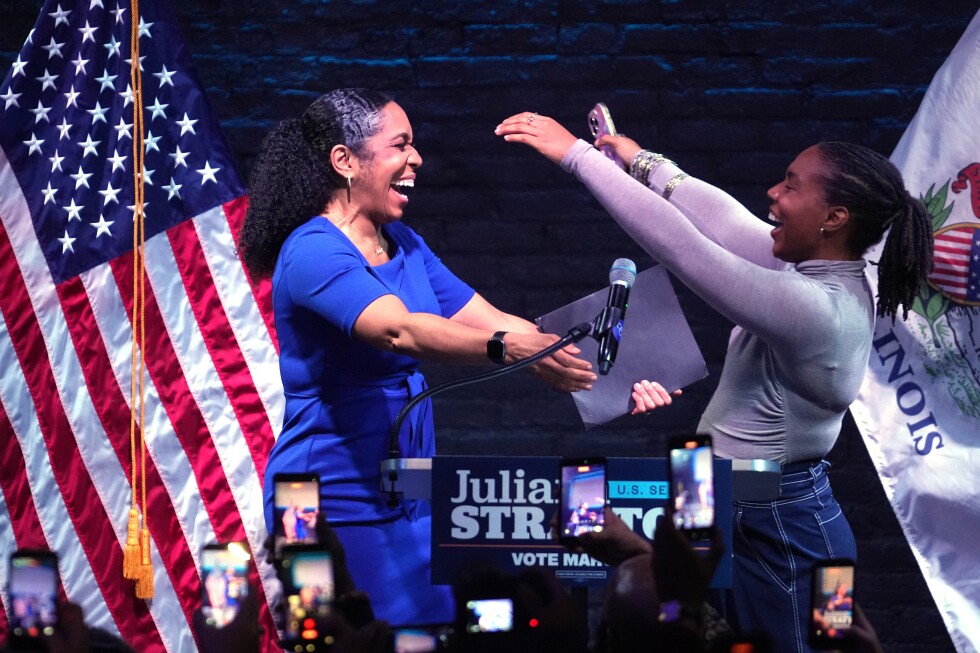
Stratton's Victory: A New Chapter for Democratic Politics Beyond AIPAC Money
The political landscape witnessed a seismic shift recently as Illinois Lieutenant Governor Juliana Stratton secured a remarkable victory in the Democratic primary for the U.S. Senate. This win wasn't just another primary upset; it was a powerful statement about the evolving dynamics of democratic politics, particularly in the shadow of significant outside spending and intense scrutiny over donor affiliations. At the heart of this narrative was the persistent discussion surrounding
AIPAC donors and Juliana Stratton, a challenge she skillfully navigated to emerge victorious. Her success offers a compelling case study for future campaigns aiming to connect directly with voters, proving that grassroots energy and a clear message can triumph over even the most well-funded opposition.
The Illinois Primary Upset Heard Round the Nation
Juliana Stratton’s triumph on Tuesday night was nothing short of historic. She overcame two seasoned members of Congress, Rep. Raja Krishnamoorthi and Rep. Robin Kelly, to clinch the Democratic nomination for the U.S. Senate seat vacated by the retiring Sen. Dick Durbin. This was one of the most closely watched races of the 2026 election cycle, attracting national attention not just for its competitive field, but for the fundamental questions it raised about the future direction of the Democratic Party and the pervasive influence of money in politics.
Stratton's path to Washington now seems clear. Illinois has not elected a Republican to the Senate since the 1990s, making her widely expected to win the general election against former Illinois Republican Party chair, Don Tracy. Her impending victory would mark a profound milestone: she would become only the sixth Black woman ever elected to the United States Senate. This historical significance resonated deeply with voters, particularly across Chicago and Cook County, where Stratton built an insurmountable lead by energizing her base and mobilizing support. Her campaign demonstrated the power of connecting with local communities and leveraging an inspiring narrative that transcends traditional political boundaries.
Unpacking the "AIPAC Shadow": Juliana Stratton and Donor Connections
No single issue generated as much discussion around Juliana Stratton's campaign as her perceived ties to donors associated with AIPAC, the American Israel Public Affairs Committee. While AIPAC itself did not formally endorse Stratton or directly fund her Senate race, the financial connections were undeniable and became a central point of contention. Federal Election Commission filings revealed that at least 27 major donors to the pro-Israel lobby contributed over $70,000 to her campaign. Notably, only a small fraction of these donors resided in Illinois, fueling questions about the origins and intent of such contributions.
Perhaps more significantly, Lee Rosenberg, a former AIPAC president and a longtime political adviser to prominent figures like Gov. JB Pritzker and President Barack Obama, served on Stratton’s campaign finance committee. This detail amplified the perception of AIPAC’s influence, even in the absence of a direct organizational endorsement.
Stratton's campaign adopted a strategic and nuanced approach to these persistent inquiries. She consistently emphasized that AIPAC had neither endorsed nor spent money on her behalf, drawing a clear distinction between the organization itself and individual donors who may also contribute to AIPAC-affiliated causes. When pressed on accepting funds from an AIPAC-affiliated group, Stratton maintained that she had not accepted money directly from the PAC itself. Furthermore, she articulated a clear and consistent stance in support of a two-state solution for Israel and Palestine. This position allowed her to navigate the complex geopolitical issue without alienating significant segments of the Democratic base, positioning herself as a candidate capable of thoughtful diplomacy rather than one beholden to any extreme. This careful framing was crucial in her ability to secure
Juliana Stratton's upset win despite the intense scrutiny.
Beyond the Headlines: The True Cost of Modern Primaries
The Illinois primaries, and the Senate race involving Juliana Stratton, became a stark illustration of the escalating role of outside money in American politics. Beyond the specific "Juliana Stratton AIPAC" donor narrative, the sheer volume of external financial intervention was staggering. More than $50 million in outside spending flooded Chicago-area congressional and Senate races, transforming the state into a real-world laboratory for testing the limits of how much money can truly influence a modern Democratic primary.
In Stratton's Senate race alone, her primary opponent, Raja Krishnamoorthi, had reportedly raised roughly $30 million. This colossal spending created an uneven playing field, challenging the notion that a superior ground game or compelling message could overcome a tidal wave of advertising and political infrastructure built on massive financial backing. Yet, Stratton's victory suggests a counter-narrative: while money undeniably shapes elections, it doesn't always guarantee victory.
This election serves as a critical reminder for the Democratic Party about the potential disconnect between national funding priorities and local voter sentiment. It underscores the importance of a candidate’s authenticity, connection to community, and ability to articulate a vision that resonates personally with constituents.
Practical Tips for Navigating Outside Money and Donor Scrutiny:
- Maintain Message Discipline: Have a clear, consistent message that directly addresses voter concerns and is resilient against external narratives.
- Build a Strong Local Base: Invest in grassroots organizing and cultivate genuine relationships within the community. These connections are invaluable when facing well-funded external attacks.
- Be Transparent but Strategic: Acknowledge donor questions directly, but pivot quickly to your core policy positions and qualifications. Distinguish between individual donors and organizational endorsements.
- Articulate Nuanced Positions: For complex issues, demonstrate a thoughtful understanding and propose balanced solutions rather than adopting absolutist stances, which can alienate broad segments of the electorate.
- Highlight Unique Strengths: Emphasize personal story, historical significance, and policy expertise that differentiate you from opponents.
Stratton's Blueprint for Success: What We Can Learn
Juliana Stratton’s victory provides a compelling blueprint for future candidates. Her success can be attributed to several key factors that allowed her to transcend the immense financial disparities and the complex narrative surrounding "Juliana Stratton AIPAC" donor ties. First and foremost was her deep connection to Illinois, particularly Chicago and Cook County, which provided the high-turnout margins she needed. Her established career as Lieutenant Governor gave her a recognizable platform and a track record of public service that resonated with voters.
Beyond her local ties, Stratton's identity as a Black woman on the cusp of making history was a powerful motivator, inspiring significant voter energy and engagement. She didn't shy away from the scrutiny over her donor affiliations but instead addressed it head-on with a clear and consistent message, emphasizing her independence and commitment to a two-state solution. This allowed her to maintain credibility and reassure voters that her policy positions were her own, not dictated by external influences. Her ability to articulate a clear vision for Illinois and the nation, coupled with her resilience in the face of persistent questioning, proved more powerful than her opponents' vast financial resources.
Conclusion
Juliana Stratton's decisive victory in the Illinois Democratic primary is more than just a local triumph; it's a significant moment in American democratic politics. It demonstrates that a well-organized campaign, rooted in community, driven by a compelling personal narrative, and armed with a clear, resilient message, can overcome the formidable challenges of outside money and intense scrutiny over donor affiliations, including those that linked
AIPAC donors to Juliana Stratton. Her success sends a loud and clear message to political operatives and candidates across the country: while financial resources are important, they are not the sole determinant of electoral success. Authentic leadership, strategic communication, and a strong connection to the electorate remain the most potent forces in shaping the future of our democracy.